
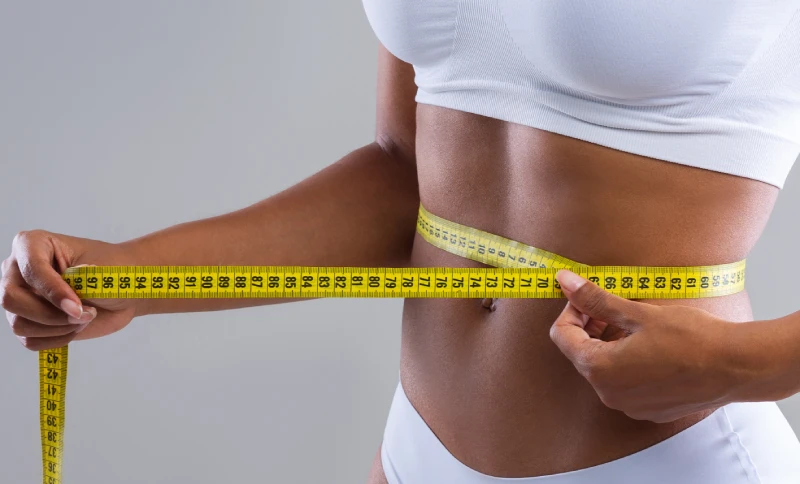
More than 1 in 8 American adults has now tried a GLP-1 medication like Ozempic, Wegovy, or Mounjaro, and many have lost 15%, 20%, or even more of their starting body weight. That’s the outcome the scale promised. What it didn’t warn you about is what happens to the skin that used to hold that weight.
When fat volume disappears quickly, skin doesn’t always shrink to match it. The result is the loose, deflated look now nicknamed “Ozempic skin” — most noticeable on the abdomen, arms, thighs, and lower face. It’s not a failure of your weight loss. It’s a separate, very treatable problem, and the right fix depends on how much skin laxity you actually have.
Why GLP-1 Weight Loss Leaves Loose Skin Behind
Skin’s ability to snap back after weight loss depends on its elastin and collagen content, both of which decline with age, sun exposure, prior pregnancies, and genetics. Rapid, large-volume weight loss — which is common with GLP-1 medications — simply outpaces what skin can retract on its own. The longer skin has been stretched and the more volume it lost, the less likely it is to recoil without help.
That’s why the “which procedure” question really comes down to one thing: how much excess, hanging skin you have versus how much of the problem is more surface-level laxity or crepiness.
The Three Main Options at a Glance
| Procedure | Best for | Invasiveness | Typical downtime |
|---|---|---|---|
| Tummy Tuck (Abdominoplasty) | Significant excess, hanging skin; often with muscle separation (diastasis recti) | Surgical, general anesthesia | 2–3 weeks |
| BodyTite | Moderate skin laxity plus stubborn fat, without a lot of overhanging skin | Minimally invasive, local/tumescent anesthesia | Several days to 1 week |
| Morpheus8 | Mild-to-moderate laxity and crepey texture, no excess fat to remove | Non-surgical to minimally invasive | Minimal (0–2 days) |
Tummy Tuck: For Real Excess Skin
A tummy tuck surgically removes excess skin and, when needed, repairs stretched or separated abdominal muscles. If you can grab a noticeable fold of loose skin, especially below the belly button, and it doesn’t retract on its own, this is usually the only procedure that fully solves it — no energy-based device can tighten skin that has lost its ability to shrink. It’s the most invasive of the three options and the one with the longest recovery, but it’s also the only one that directly addresses hanging, excess skin rather than just tightening what’s already a reasonable amount.
BodyTite: The Middle Ground
BodyTite is a radiofrequency-assisted liposuction technique: a probe delivers RF energy under the skin at the same time fat is being removed, which contracts the tissue while contouring it. It’s a good match for patients who still have some stubborn fat along with moderate skin laxity, but not enough loose, hanging skin to require excision. Many patients think of it as sitting between a non-surgical treatment and a tummy tuck — real, measurable tightening without the incision length or downtime of a full abdominoplasty.
Morpheus8: For Mild Laxity, No Surgery
Morpheus8 combines microneedling with radiofrequency energy delivered deeper into the skin, stimulating collagen production without removing tissue or fat. It’s the right call when the issue is more textural — crepey, thin, or mildly loose skin — rather than a fold you can pinch and pull. It typically requires a series of sessions and works gradually over a few months as new collagen builds. It won’t resolve significant excess skin, but for the right candidate it’s an effective way to avoid surgery altogether.
How to Choose: Match the Procedure to Your Skin, Not the Other Way Around
The honest starting point is the “pinch test”: how much skin can you gather in your hand, and does it bounce back when you let go?
- Skin springs back with mild crepiness or texture change: Morpheus8 is usually enough.
- Skin is loose with some stubborn fat but doesn’t hang past what you can smooth with your hand: BodyTite is often the better fit.
- Skin visibly hangs, especially with muscle laxity: a tummy tuck is typically the only procedure that will get you the result you’re picturing.
These aren’t rules you should apply to yourself in the mirror and commit to — they’re a starting point for a conversation. An in-person or virtual consultation, including a physical assessment of your skin quality, muscle tone, and goals, is the only reliable way to know which category you fall into. Some patients also combine approaches, for example Morpheus8 as a touch-up after BodyTite, or muscle repair during a tummy tuck alongside liposuction elsewhere on the body.
Timing Matters as Much as the Procedure
Whichever option you’re considering, timing is as important as the choice itself. Body contouring works best — and is safest — once your weight has been stable for roughly three to six months. Operating on a body that’s still losing weight risks an outcome that doesn’t hold, since further weight change can undo skin tightening or leave new laxity behind. If you’re still actively losing on a GLP-1 medication, that’s worth discussing with your surgeon before scheduling anything.
Ready to Find Out Which Option Fits You?
Every body that’s been through significant weight loss is different, and the right answer here really does depend on an in-person assessment. bodySCULPT’s team can evaluate your skin quality and goals and walk you through whether a tummy tuck, BodyTite, Morpheus8, or a combination makes the most sense for you.
Schedule a Consultation or Book a Virtual Consultation to get a personalized recommendation.
The information in this article is for educational purposes only and does not constitute medical advice. Individual results vary, and candidacy for any procedure is determined through a consultation with a qualified provider.